All services
04 / Service

Fullstack

Web, mobile, backend, infra: production-grade product teams on demand. From zero-to-one to scale.

When you need a real engineering team (designers, frontend, backend, infra, QA) embedded on your problem for a quarter or two, we drop in as one. We ship product. From founding-team MVPs to platform rebuilds to last-mile launches, we work the way modern product teams do: weekly demos, two-week cycles, real users in week one.

Start a project
01/ Overview

How we think about fullstack.

Sometimes you don’t need an AI layer or a workflow — you need a real engineering team to build the thing. Fullstack is when we drop in as one: designer, frontend, backend, infra, QA, embedded for a quarter or two on your problem.

We ship product. From founding-team MVPs to platform rebuilds to last-mile launches, we work the way modern product teams do: weekly demos, two-week cycles, real users in week one, owned code in your repo, runbook on day one.

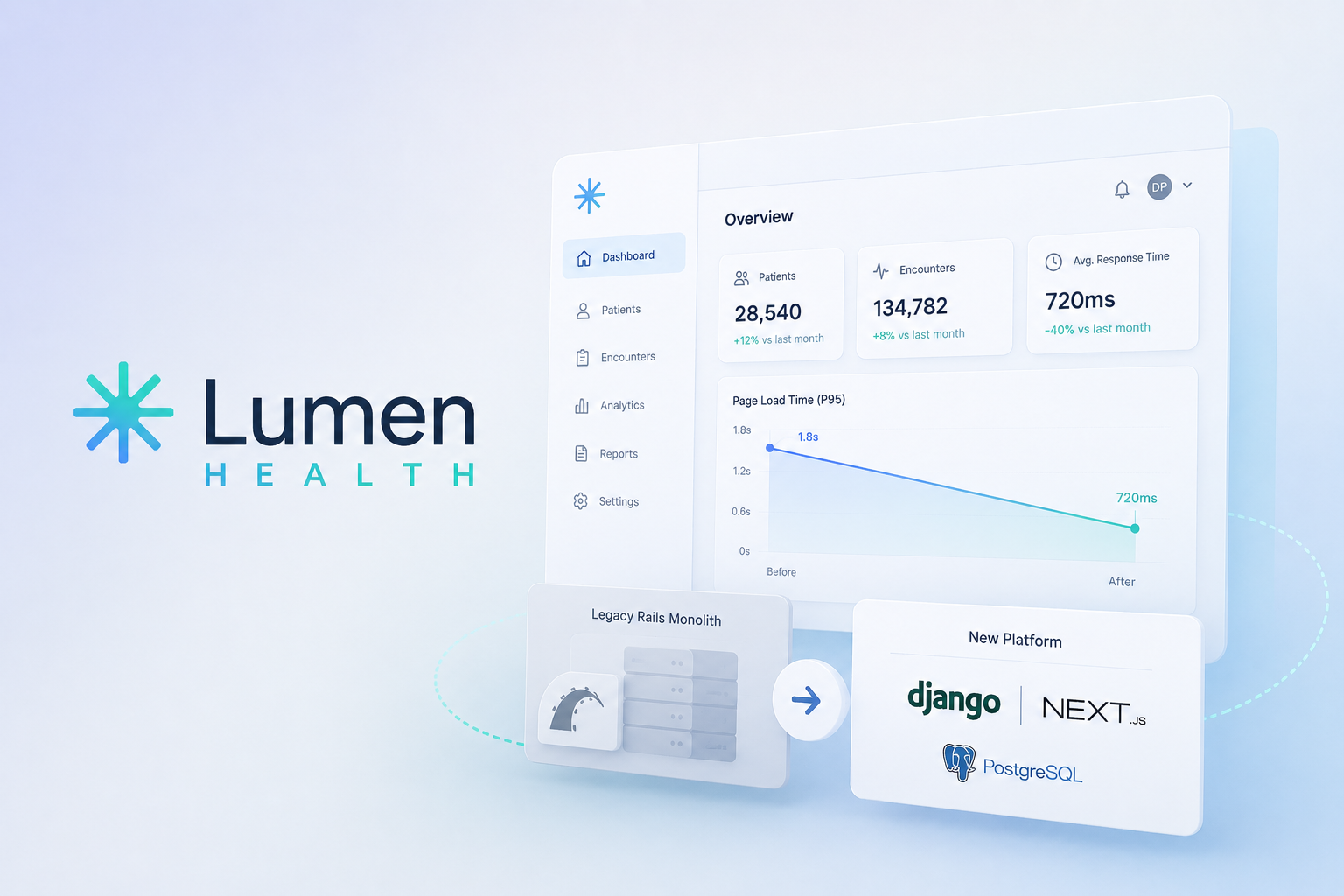
Stack is whatever the job demands. Most builds: Django or FastAPI on the backend, Next.js or React on the frontend, Postgres as the system of record, deployed on AWS or Vercel. We use Claude Code as a coworker on the parts that benefit from it and senior humans on the calls that matter.
02/ Capabilities → 4 areas

What we build.

  1. Web & mobile apps

    React, Next.js, Django, FastAPI, React Native, Swift, Kotlin, picked for the job, not the resume. SSR or SPA depending on what the product actually needs.

  2. APIs & platforms

    Backend services in Python (Django, FastAPI) or TypeScript (Node, tRPC). GraphQL with Apollo, REST with OpenAPI specs, gRPC when latency matters. Postgres or DynamoDB as the system of record.

  3. Infra & DevOps

    AWS, GCP, Vercel, Fly, Railway, Cloudflare, Kubernetes. Terraform / Pulumi for IaC. GitHub Actions for CI. Docker, observability with Datadog or Grafana / Loki.

  4. Product engineering

    Weekly demos, two-week cycles, design + engineering in the same room. Built with Claude Code coworkers for the boring bits, humans for the calls that matter.

03/ Use cases → 6 examples

Where this shows up.

  • Zero-to-one MVP

    Founding team, no engineering org. We get a real product into real users' hands in 6–10 weeks, then either retainer or hand off to your first hire.

  • Platform rebuild

    Legacy codebase eating your team. We rebuild on modern stack with zero downtime, migrating tenant-by-tenant.

  • Mobile app (iOS / Android)

    React Native for cross-platform with a single codebase, or native Swift / Kotlin when the product earns it.

  • API and platform engineering

    Public APIs, internal platforms, gRPC services, GraphQL gateways. Designed to scale, instrumented from day one.

  • Infra and DevOps

    AWS, GCP, Vercel, Fly, Cloudflare, Kubernetes. Terraform / Pulumi for IaC. CI/CD with GitHub Actions. Observability with Datadog or Grafana / Loki.

  • Embedded product pod

    A designer + 2–3 engineers + a PM inside your product org for a quarter. Predictable monthly cost, flexible scope.

04/ Why this ↓ outcomes

What you get back.

  1. Working software in three weeks

    Real product on a staging URL by week three. Demos every Friday. Decisions every other Monday.

  2. Your code, your repo

    No lock-in. Clean repository with documentation, CI, runbook. We are trying to make ourselves easy to leave.

  3. Senior people, no juniors hidden

    Every engineer on your project has shipped multiple production systems. The team you met is the team that builds it.

  4. Boring infrastructure

    Postgres, Django, Next.js, AWS. We pick the proven thing because novelty for novelty's sake costs you uptime later.

05/ Stack → 11 tools

Tools we use for fullstack.

ReactNext.jsDjangoFastAPITypeScriptPostgresAWSVercelKubernetesTerraformClaude Code

Want the full picture across every service? See the complete stack.

06/ Related work All Fullstack case studies →

Shipped with this service.

07/ Questions ↓ tap to expand

About fullstack.

Do you work with our existing engineers?

Yes. Most of our retainers and staff-aug engagements work alongside in-house teams. We adapt to your process, not the other way around. Daily standups with your eng manager, weekly with us.

What is your default backend stack?

Python (Django for full apps with an admin, FastAPI when it is a thin API gateway). TypeScript (Node / tRPC) when the team is JS-first. Postgres is our default database. We use what the job demands, not what is on our resume.

Do you do mobile?

Yes. React Native by default — single codebase, fast iteration. Native Swift / Kotlin when the product earns it (e.g. heavy on-device ML, AR, or platform-specific UX).

Who owns the code?

You do. Always. We deliver clean repositories with documentation, CI, and a runbook. We do not hold the keys.

How do you use AI coworkers like Claude Code?

We use Claude Code (and similar tools) on the boring parts of the work — boilerplate, refactors, test scaffolding, doc generation — so our engineers spend their time on the calls that matter. For client projects we can set up Claude coworkers inside your org so your team gets the same leverage after we hand off.

↗ Start a project

Working on fullstack?
Let's talk.

Tell us about the workflow you want to fix, the bottleneck you want gone, or the product you want shipped. We come back within 24 hours, usually with a few sharper questions.

Start a project

↓ Up next

01
AI Integration
LLM apps, retrieval, fine-tuning, and AI features bolted into your existing product, without breaking what works.