Five automations we actually ship on n8n
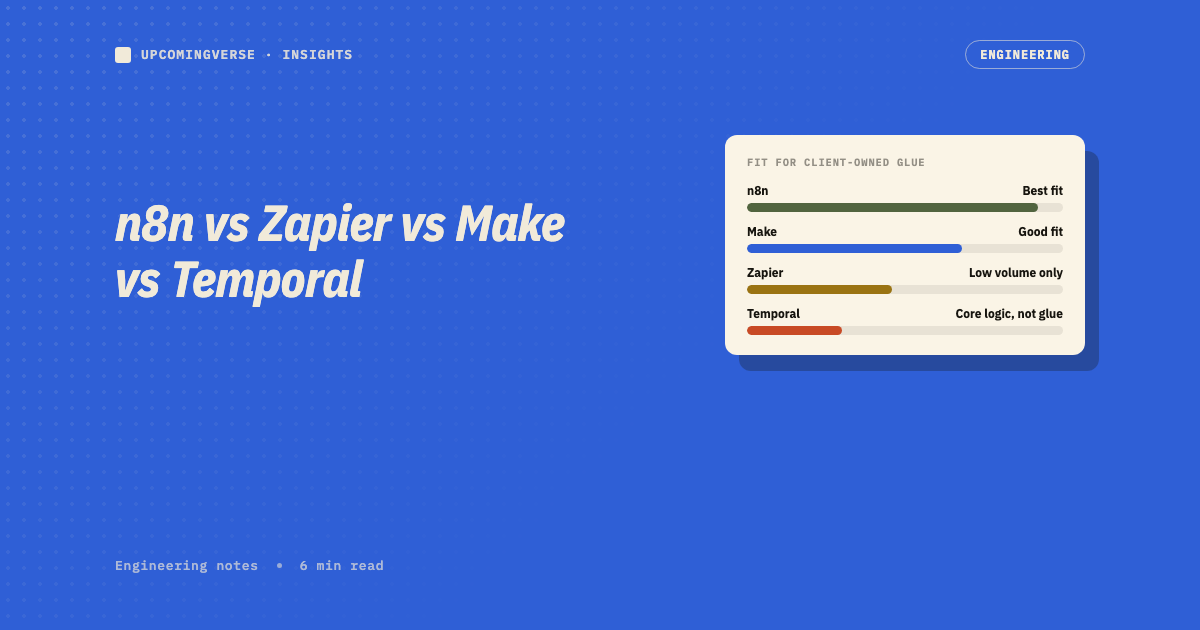
Why we reach for n8n for integration glue, not core product logic, and what we have built with it.
Why n8n, specifically
We reach for n8n when a client needs integration glue between tools they already use, not a new product. It’s open source, self-hostable, and visual enough that a non-engineer on the client’s team can read an existing workflow and understand what it does without asking us. That last point matters more than it sounds: a workflow nobody but us can read becomes a support ticket forever. A workflow the client’s own ops lead can open and follow becomes something they actually own.
Five we’ve actually shipped
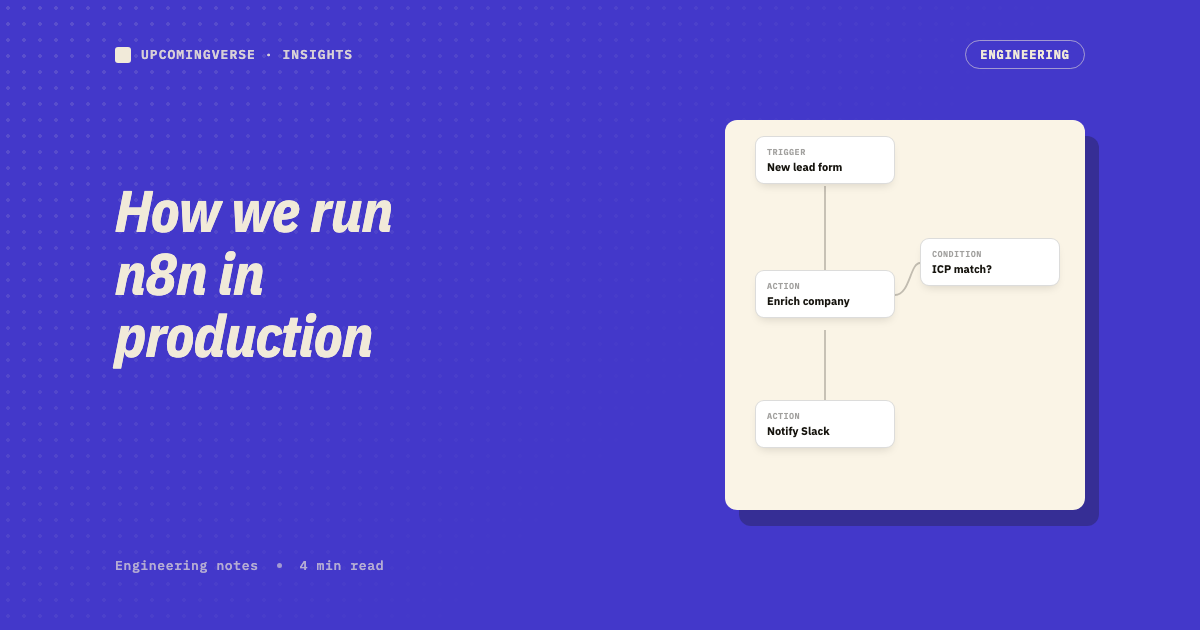
Lead enrichment and CRM sync. A client had leads coming from three different sources (a form, a job board scrape, inbound email) landing in three different places, checked manually twice a day. We built a single flow that normalizes all three into one shape, enriches each lead with a third-party API, and writes a clean CRM entry with a Slack ping for anything that looks like a hot lead. Manual triage time went from roughly 40 minutes a day to near zero.
Delivery anomaly alerts. A logistics client needed to know the moment a shipment deviated from its expected route or fell meaningfully behind schedule, not at end-of-day review. The flow polls GPS and delivery data, checks against expected windows, and pushes a real-time alert to the ops team on WhatsApp and Slack the moment something looks wrong.
Candidate pipeline automation. Parsing inbound candidate emails, triggering interview scheduling, and syncing results back to an internal dashboard used to be three separate manual steps owned by two different people. It’s now one flow, and the HR lead who owns the process can see exactly which step a candidate is on without asking anyone.
End-of-day financial reporting. A fintech client’s daily report used to be assembled by hand from four different sources, every evening, by someone who’d rather have been doing anything else. The flow now scrapes the sources, transforms the numbers in a connected spreadsheet, and delivers a formatted summary to the right inbox before anyone has to think about it.
Cross-platform content scheduling. For a client running content across Instagram, X, and LinkedIn, we built a flow that takes an approved content idea, generates the supporting visual, schedules the post per platform, and pulls performance numbers back into one dashboard a week later, instead of three separate native schedulers nobody fully trusted.
What clients actually get out of it
No vendor lock-in: the workflow is visible, editable, and self-hostable, not a black box tied to our continued involvement. Fast iteration: a changed requirement is usually a same-day edit, not a new sprint. And it connects to almost anything already in a client’s stack, Slack, Notion, Gmail, Airtable, Postgres, or a bespoke internal API, without us writing a custom integration from zero.
Where we don’t use it
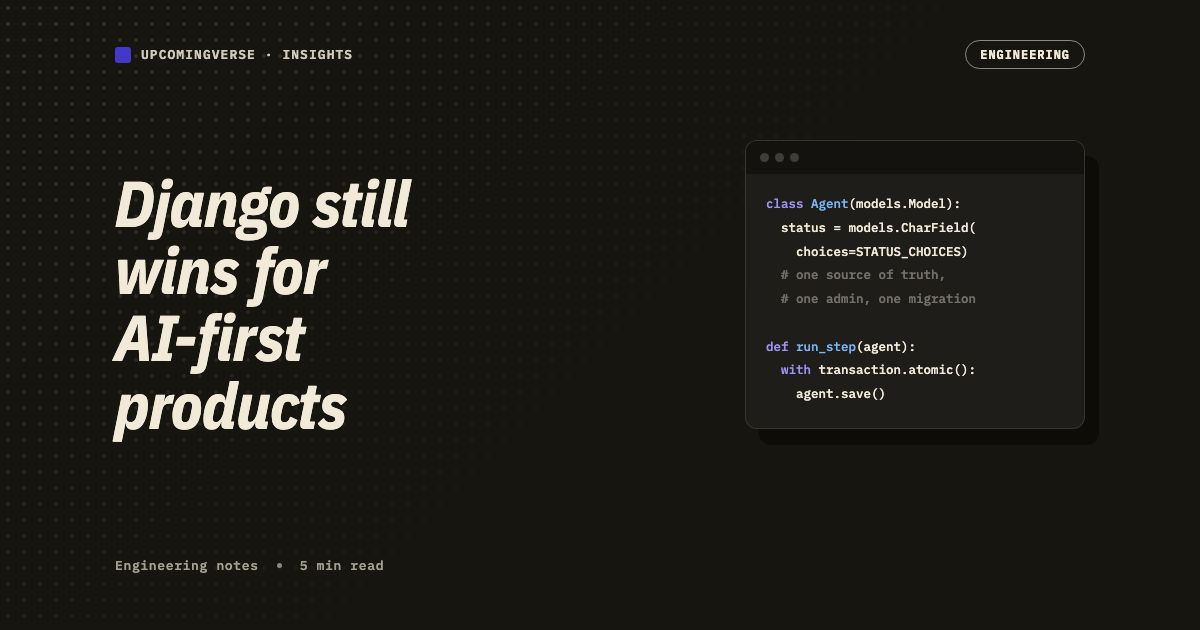
n8n is for integration and orchestration glue, not for the core product logic. If the workflow is the product (a multi-agent research pipeline, a core billing engine), that lives in code we own outright, in Django or a dedicated service, with the testing and version control that deserves. n8n earns its place connecting the systems around that core, not replacing it.